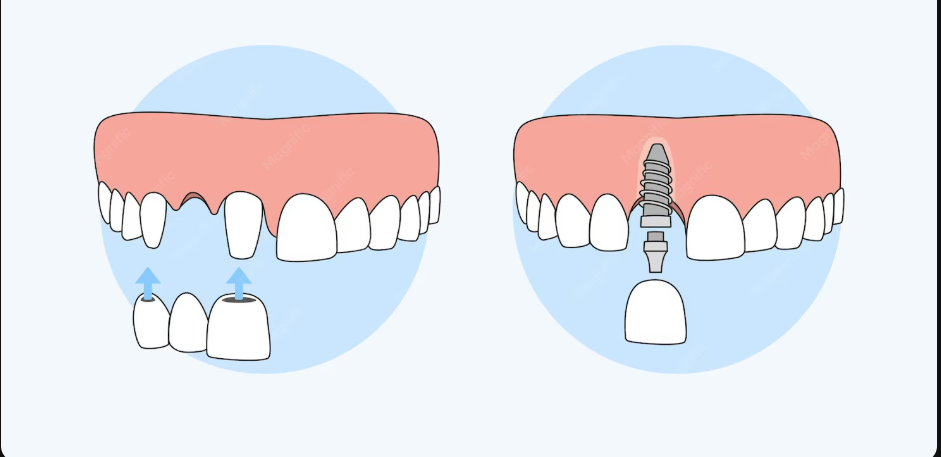
Replacing missing teeth can make it easier to chew and speak. It can also fill gaps in your smile. Dental implants in Broomfield and dental bridges are two common ways to replace missing teeth, but they work in different ways. A dental office can help you choose the right option based on how many teeth are missing, the health of your other teeth and jawbone, your budget, and your needs.
Understanding the differences between an implant and a bridge can make it easier to know what to discuss during a dental assessment.
What Is the Difference Between an Implant and a Bridge?
The main difference in a dental implant vs. bridge comparison is how the replacement tooth is supported.
A dental implant is placed into the jaw and used to support a replacement tooth. A bridge uses nearby teeth or other dental support to hold one or more replacement teeth in the gap.
Neither option is automatically right for everyone. The choice depends on your individual dental situation.
How Do Dental Implants Replace a Missing Tooth?
An implant replaces the root of a missing tooth with a small post placed in the jaw. After the area heals, a replacement tooth is placed on the implant.
The process usually includes:
- Checking the missing tooth and jawbone
- Planning where to place the implant
- Placing the implant
- Waiting for the area to heal
- Attaching the replacement tooth
The time needed can vary based on healing, bone health, and whether you need any other treatment.
How Do Dental Bridges Work?
Dental bridges fill a gap by placing a replacement tooth between supporting structures. Traditional bridges commonly use neighbouring teeth for support.
Dental bridges in Broomfield may be considered when the surrounding teeth are strong enough to support the restoration and the overall dental conditions are suitable.
Unlike an implant, a traditional bridge does not require an implant post to be placed into the jaw.
Which Option Lasts Longer?
Both implants and bridges can provide long-term tooth replacement, but their expected lifespan depends on factors such as oral hygiene, biting forces, dental habits, and regular professional care.
Implant-supported restorations can have long service lives when properly maintained. Bridges can also last for many years but may eventually need repair or replacement.
There is no guaranteed lifespan for either option.
What Maintenance Does Each Option Need?
Good daily care is important for both treatments.
With an implant, cleaning around the replacement tooth and implant area is essential. Special cleaning tools may be recommended depending on the restoration.
A bridge also requires careful cleaning around and underneath the replacement tooth. Regular dental visits at a dental office in Broomfield help check the restoration and the surrounding teeth and gums.
Replacing missing teeth does not end with the procedure itself. Long-term maintenance is part of protecting the result.
What If There Is Not Enough Bone for an Implant?
Adequate jawbone support is important for implant placement. When there has been bone loss, additional treatment may sometimes be recommended before or during implant treatment.
A bone graft & membrane in Broomfield may be considered when more bone support is needed. In the upper back jaw, a sinus lift in Broomfield may sometimes be discussed when the available bone height is limited.
These procedures are not needed for every implant case. An assessment and imaging can help determine whether they are appropriate.
Who May Be a Good Candidate for Each Option?
A dental implant may be considered when the jawbone, gums, and overall oral health can support implant treatment.
A bridge may be an option when suitable supporting teeth or structures are available.
Factors considered may include:
- Number and location of missing teeth
- Condition of nearby teeth
- Gum health
- Jawbone condition
- Overall oral health
- Treatment preferences
- Budget and timeline
A dental office near you can assess these factors and explain which options may be suitable.
Dental Implant vs Bridge: Which One Is Better?
There is no universal winner. An implant may be preferred when replacing a missing tooth without using neighbouring teeth for support is important, and implant treatment is suitable.
A bridge may be more appropriate when a faster treatment timeline or a non-implant option is preferred.
The right choice should be based on your dental condition rather than simply choosing the treatment that sounds more advanced.
Choose a Tooth Replacement Plan That Fits Your Needs!
Missing teeth can be replaced in different ways, and the most suitable option depends on your oral health, treatment goals, and individual circumstances. A careful assessment can help you understand the benefits, limitations, costs, and expected timeline of each approach.
Book an appointment with Clear Dental Studio to discuss your tooth replacement options and find a treatment approach suited to your smile and long-term dental needs.
FAQs
Is an implant stronger than a bridge?
The jaw supports implants, while traditional bridges rely on supporting teeth or other structures. Strength and suitability depend on the individual case.
Does getting an implant take longer than getting a bridge?
Usually, implant treatment takes longer because healing time is needed. A bridge can often be completed sooner, although timelines vary.
Can a bridge replace more than one missing tooth?
Yes. A bridge can replace multiple missing teeth when the location and available support make the treatment suitable.
Is bone grafting always needed before an implant?
No. Bone grafting is only considered when additional bone support is needed for implant placement.